If you price your Niceville home too high, you may lose the early momentum that matters most. If you price it too low, you risk leaving value on the table. The good news is that strategic pricing is not a guessing game. With the right local data and a clear plan, you can position your home to attract serious buyers and make confident decisions from day one. Let’s dive in.
Why pricing matters in Niceville
Niceville is an active market, but it is also a selective one. As of March 2026, Realtor.com reports 275 homes for sale, a median list price of $479,500, and a median 71 days on market. It also reports a 99% sales-to-list-price ratio, which suggests buyers are still paying close to asking price when homes are priced well for the market.
That does not mean every home should aim for the top of the range. According to Realtor.com’s Niceville market overview, the market is balanced, which means buyers have options and pricing discipline matters. In a market like this, a smart list price is often what creates the strongest first impression.
Start with recent comparable sales
The best place to begin is with recent comparable sales, often called comps. These are homes that have sold recently and are similar to yours in size, condition, features, and location. In Niceville, that local detail matters because pricing can shift meaningfully from one area to another.
Realtor.com specifically recommends using recent comparable sales, local market factors, and neighborhood trends when pricing a Niceville home. That is especially important in a city where neighborhood-level price points are not uniform. For example, Realtor.com shows Bluewater Bay with a median listing price of $425,000 and Rocky Bayou at $657,500, which is a wide spread within the same city.
Why neighborhood averages are not enough
Citywide numbers can be useful for context, but they should not set your price by themselves. A median list price for all of Niceville does not account for your street, lot, updates, layout, or buyer competition nearby.
That is why a detailed comp review matters more than broad averages. When you compare your home to recent nearby sales with similar characteristics, you get a pricing strategy grounded in what buyers are actually choosing.
Understand the difference between value metrics
One of the biggest seller mistakes is relying on one number from one source. In Niceville, public-facing pricing data varies quite a bit depending on what is being measured.
Here is what current data shows:
- The U.S. Census Bureau lists the median value of owner-occupied housing units at $423,500
- Zillow’s Niceville home value measure is cited in the research at $437,726
- Redfin’s March 2026 median sold price is $455,000
- Realtor.com’s March 2026 median list price is $479,500
These numbers are not conflicting as much as they are answering different questions. Owner-occupied value, automated home value estimates, sold-price data, and active list-price data each tell part of the story. For setting a list price, the strongest approach is to use them as background and then anchor your strategy in recent comps.
Price for the market you are entering now
It is easy to anchor to last year’s headlines or a neighbor’s asking price. But your home needs to be priced for the market buyers are shopping in today.
The broader local backdrop points to a more balanced environment. Realtor.com reports Okaloosa County with a median sale price of $400,000, a median price per square foot of $250, and a 99% sales-to-list-price ratio, while also noting that the county’s median sale price was down 4.76% year over year. Florida Realtors’ January 2026 report for the Crestview, Fort Walton Beach, Destin MSA shows a $430,000 median sale price, down 3.8% year over year, with closed sales up 1.5%.
That combination tells you something important. Buyers are still active, but they are also more price-aware than they were in the peak seller-market period. A strategic price should reflect current competition, not just a hopeful target.
Buyers have more choices now
Florida Realtors also highlights a steadier 2026 backdrop, citing Realtor.com’s forecast of active listings up 8.9% year over year nationally, average 30-year mortgage rates near 6.3%, and a national average of 4.6 months of supply. More available inventory means your home needs to stand out on both price and presentation.
This does not mean you should underprice your home. It means your pricing should be persuasive enough to earn attention quickly, especially when buyers are comparing multiple options.
Use condition to support your price
Condition and updates should absolutely influence your pricing strategy, but not always in the way sellers expect. Bigger renovation budgets do not automatically lead to bigger returns.
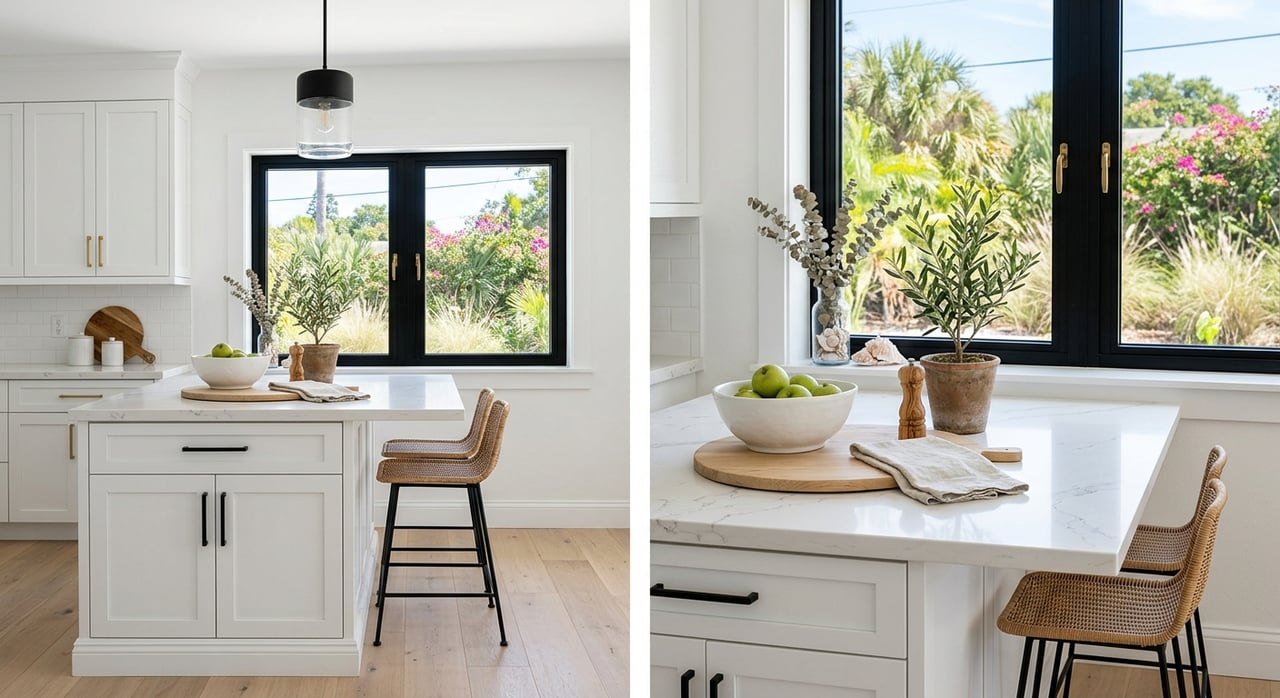
Realtor.com’s Niceville guidance notes that cosmetic updates such as paint, fixtures, and landscaping can help, while major renovations rarely return full cost before sale. For many sellers, that means focusing on move-in-ready appeal instead of taking on expensive pre-listing projects.
Small improvements can make a big difference
Before listing, it can help to prioritize updates that improve how the home looks and feels right away, such as:
- Fresh interior paint
- Updated light fixtures
- Clean, uncluttered spaces
- Tidy landscaping
- Minor repairs that buyers will notice during showings
These steps can support stronger buyer perception and make your asking price feel more justified. In many cases, that is more effective than over-improving the property for the neighborhood.
Watch early activity after listing
A strong pricing strategy is not just about launch day. It also includes how you monitor buyer response once your home hits the market.
If showings are slow, feedback is hesitant, or buyers consistently mention price, those are signs worth taking seriously. The research suggests using Niceville’s current pace of roughly 71 to 76 days on market as a reference point. If your home is getting less attention than comparable listings, your pricing may need a closer look.
Signs your price may be too high
Watch for these common indicators:
- Few showings in the first couple of weeks
- Online views are not turning into in-person visits
- Repeated feedback that the home feels overpriced
- Competing homes are going pending while yours sits
Strategic sellers respond to the market instead of waiting too long. A timely adjustment can preserve momentum and help avoid the stale-listing effect.
Timing can help, but it is not everything
Many sellers ask if they should wait for the perfect week to list. Timing can be a useful factor, but it works best when paired with accurate pricing.
Realtor.com’s 2026 Best Time to Sell report says the week of April 13 to 19 has been historically favorable nationwide, with stronger prices and lower competition than January listings. That can be a helpful planning note, but it should be treated as a timing consideration, not a promise.
In Niceville, the better question is often this: Is your home ready, and is your price aligned with current buyer expectations? If the answer is yes, you are in a much stronger position no matter the week you list.
Build a pricing strategy, not just a price
The most effective pricing plan is a collaboration between you and your listing agent. It should account for your home’s condition, recent comps, neighborhood trends, current competition, and your timeline.
In a balanced market like Niceville, the goal is usually to attract enough interest early without pricing so aggressively that the listing stalls. Since Realtor.com reports a market where homes are selling close to asking price when priced appropriately, careful positioning can help you protect value while staying competitive.
A clear strategy can include:
- Reviewing recent comparable sales
- Looking at active competition in your area
- Evaluating your home’s condition and updates
- Considering local days on market trends
- Adjusting quickly if feedback points to a pricing issue
When you approach pricing this way, you are not chasing a number. You are creating a plan designed to support a smoother, more informed sale.
Selling in Niceville takes more than pulling a number from an online estimate or copying a nearby listing. It takes local context, steady guidance, and a pricing strategy built around what buyers are doing right now. If you want a personalized plan for your home, LJB Signature Homes is here to help you move forward with clarity, confidence, and a signature level of care.
FAQs
How should I price my home for the Niceville market?
- Start with recent comparable sales, then factor in your home’s condition, neighborhood trends, and current competition in Niceville.
Can I trust one online home value estimate for my Niceville home?
- No. Niceville pricing data varies across sources, so online estimates are best used as context rather than a final list-price decision.
Does neighborhood location affect home pricing in Niceville?
- Yes. Realtor.com shows meaningful pricing differences within Niceville, including different median listing prices in areas like Bluewater Bay and Rocky Bayou.
Should I renovate before selling my home in Niceville?
- Usually, minor cosmetic improvements make more sense than major renovations, since large projects often do not return full cost before sale.
How can I tell if my Niceville home is priced too high?
- If showings are slow, buyer feedback points to price, or your listing lags behind Niceville’s typical market pace, it may be time to revisit your pricing strategy.